


Upcycling vs Recycling : Understanding the Difference
This article aims to clarify the fundamental differences between two essential approaches to waste management and resource conservation: upcycling and recycling.
To understand these two principles, we will first delve into the world of upcycling, an innovative method of transforming end-of-life objects or materials into products of greater value, without going through the process of degradation or destruction. In addition, we will explore recycling, a more familiar method of collecting, processing and reusing materials to reduce waste and demand for raw materials.
This crucial distinction between upcycling and recycling will help us to better understand how these approaches contribute to environmental sustainability while encouraging creativity and reflection on how we manage our planet's limited resources.
We will then illustrate these two concepts through the products of our Aatise brand, which stands out for its commitment to sustainability and innovation in fashion. By taking a close look at Aatise's creations, we'll be able to see how upcycling and recycling are creatively integrated into the design of trendy clothing and accessories.
Upcycling: creativity for reuse
A) Using existing clothes :
In today's world of fashion, as with the rest of the planet, sustainability and eco-responsibility now play an essential role! So it's worth noting that upcycling clothes has become an increasingly popular practice. Having said that, it's not a new phenomenon - upcycling fabrics or clothes has always existed, whether through conscious action or not.
Upcycling is a creative practice that gives new life to used items of clothing in a very unique way. Unlike recycling, which breaks down textiles into raw materials, upcycling involves transforming existing garments into fashionable new pieces without altering their original composition. This means that each upcycled garment retains some of its history, fabric and character while being given a second chance. This ingenious approach allows fashion designers to rethink and reuse existing pieces to create unique items, reducing textile waste and contributing to a more sustainable fashion world.
The key stages in upcycling clothes
- Selection of used clothing : Designers or upcycling enthusiasts select used or abandoned clothing that still has potential.
- Creative transformation :Clothes are transformed using sewing, cutting, embroidery or other creative methods to create new garments or accessories.
- Preservation of quality : The aim is to preserve as much as possible of the quality and integrity of the original textiles while giving them a new lease of life.
- Unique pieces : Upcycling products are often one-of-a-kind and bear the creative stamp of the converter.
Upcycling encourages creativity while reducing textile waste. It offers an alternative to the disposable culture by extending the life of existing garments. However, it can be more labour-intensive than recycling and depends heavily on the skills and vision of the designer.
B) Using fabrics from long-dormant rolls:
We buy these fabrics in order to give them a new lease of life and offer you a high-quality garment that is responsible for the planet. These rolls come from overstock or the end of unused rolls, which limits waste and allows us to make unique garments.
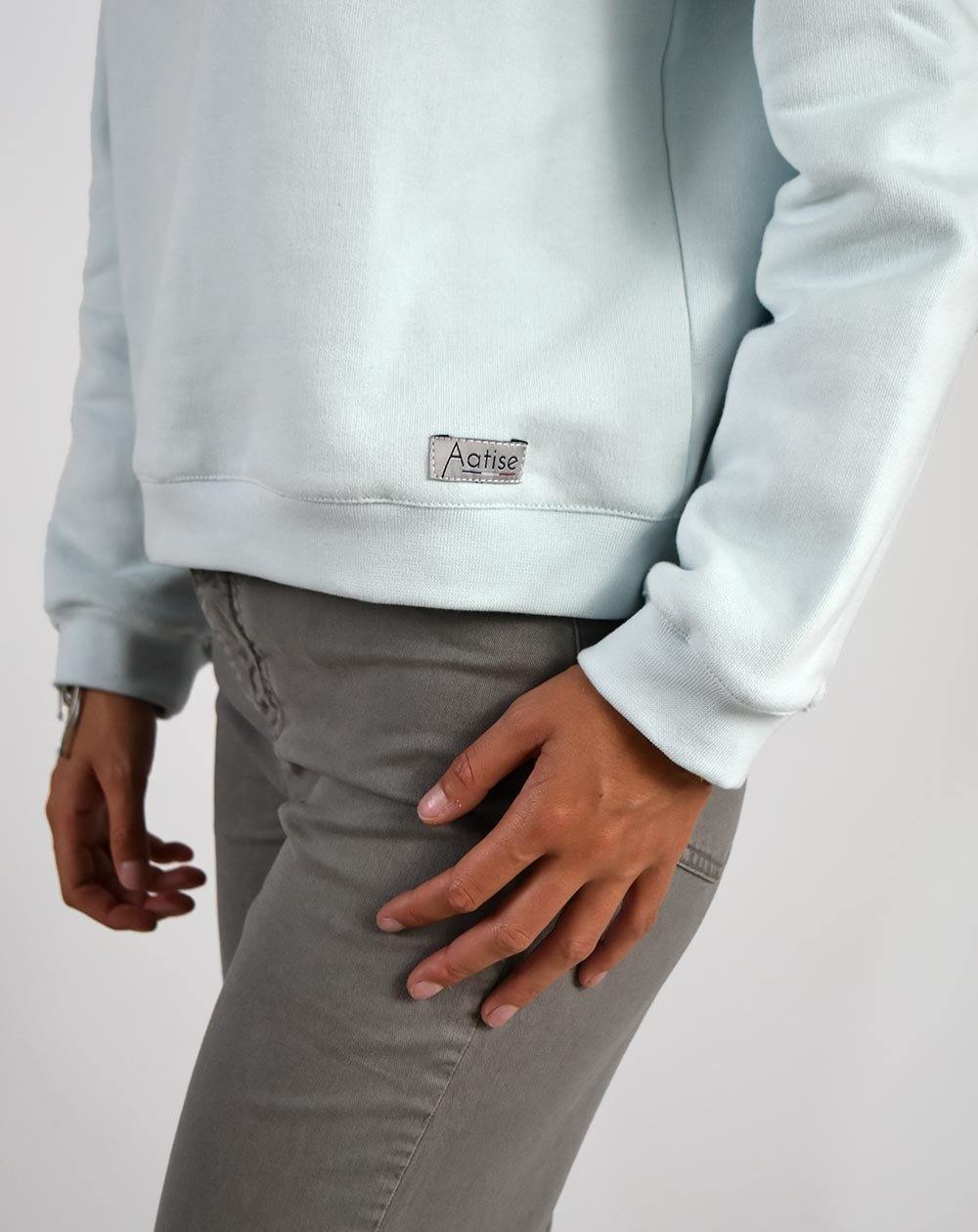
Upcycling in Fashion: Aatise Sweatshirts Reinvent Sustainability
A concrete example of upcycling in the fashion industry is the brand Aatise and its innovative upcycled clothing. We've taken an innovative approach by making Zago sweatshirts from upcycled cotton and lots of other upcycled clothing!
We source used and unsold fabrics from a range of sources including Recovo, Uptrade and Beglarian to give them a new lease of life. And by recovering these clothes, we prevent them from ending up in landfill and help to preserve natural resources.
Recycling: a second life as a raw material
Recycling clothes is a well-known practice. It involves collecting used textiles, breaking them down into fibres and then reusing them to make new products. The main aim is to reduce the amount of textile waste sent to landfill and minimise the use of virgin resources such as cotton or polyester.
Here's how recycling works:
- Collection and sorting of used clothing : Used clothing is collected from consumers via collection points, donation boxes or take-back schemes.
- Dismantling : Textiles are sorted according to their composition (cotton, polyester, etc.) to facilitate their decomposition.
- Fibre reduction : Clothing is broken down into textile fibres, which can then be used to make new textile products.
- Production of new textiles : Recycled fibres are mixed with virgin or recycled fibres to create new textiles, which can then be used to manufacture clothing and other products.
Recycling has the major advantage of reducing the demand for new raw materials, which in turn reduces pressure on the environment. However, the recycling process can consume energy and water, depending on the methods used, which limits its positive environmental impact.

Aatise and its recycled jumpers: a commitment to sustainability & Made in France
As an Eco Fashion Activist brand, we are deeply committed to the local and responsible production of our clothing. So here's a concrete example: our Zyclos recycled jumpers, made entirely in France!
They were created in collaboration with local craftsmen who share our vision of sustainability and quality. By choosing our products, you're not only supporting the local economy, you're also helping to reduce the carbon emissions associated with international transport.
These jumpers stand out for their exceptional quality and remarkable durability. The materials are carefully selected for their strength and their ability to maintain their original shape and appearance even after repeated washing.
By choosing an Aatise jumper, you are investing in a piece that will stand the test of time, reducing the need to buy new clothes frequently and helping to reduce textile waste.
To remember
So which approach is better, upcycling or recycling clothes? The answer depends on a number of factors, including available resources, sewing skills and individual preferences. Ultimately, both approaches help to reduce textile waste and minimize the environmental impact of the fashion industry.
Recycling offers an ideal solution for reducing the demand for new raw materials, while upcycling encourages creativity while preserving the integrity of existing garments. Consumers can support both practices by donating their used clothing for recycling or by encouraging local designers who are dedicated to upcycling.
Ultimately, the choice between upcycling and recycling may be a matter of personal preference, but both are important steps towards a more sustainable future in the fashion industry.
Share this content


